

Data lineage is the systematic tracking of where data comes from, how it is transformed, and how it moves through various systems over time.
It is aimed at data engineers, analysts, and AI‑search developers who read technical guides alongside system documentation.
External context
Understanding data lineage gives you clear visibility into the life cycle of the brand information your AI search relies on, making it easier to spot and fix problems in your pipelines. By mapping origins, transformations, and flows, you can trace any issue back to its source and ensure the integrity of the data you present on your pages. This insight also supports compliance and debugging when building or maintaining your own data‑driven features.
Data lineage Wikipedia contributors, “Data lineage”, en.wikipedia.orgLicence01What it is and how it works
Data Lineage is a record of the source, processing steps, and destinations of the data that feeds AI search. When a brand’s product feed, website content, or user‑generated review is ingested, each step—parsing, enrichment, indexing, ranking—adds a metadata tag that points back to the original source. By chaining these tags, a system can reconstruct the exact path the data took, detect alterations, and assess whether the final output matches the brand’s intent. The mechanism relies on logging, versioned storage, and identifiers such as URLs, timestamps, and schema.org IDs.
Data Lineage tells you where brand data starts and what happens to it before AI shows it.
02What to do about it
Start building a simple lineage map this week. 1. Tag every inbound data file with a unique source ID (e.g., a SKU or URL). 2. Enable your AI platform’s audit logs and export them to a central spreadsheet. 3. Use a lightweight tool like a spreadsheet or a free data‑catalog service to link source IDs to processing stages. 4. Review the map with your SEO team to spot gaps where data is dropped or transformed unexpectedly.
- Create a source‑ID column in your product feed.
- Turn on audit logging in your AI model serving platform.
- Document each transformation script with a comment that includes the source ID.
03How it is measured or noticed
You can tell Data Lineage is working when you can answer three questions for any AI‑generated snippet: (1) Which URL supplied the fact? (2) Which script or model altered the text? (3) When was the last update? Look for logs that contain fields like source_url, transformation_step, and timestamp. In Google Search Console, the “URL Inspection” tool can reveal the exact version of a page that Google indexed, which is a proxy for lineage visibility.
- Search console’s URL Inspection shows the indexed version.
- Audit logs that include
source_urlprove traceability. - Version numbers in your CMS confirm when content changed.
How the record puts it
Data lineage refers to the process of tracking how data is generated, transformed, transmitted and used across systems over time.
04Common mistakes
- Assume a single source ID is enough for all content types – different formats need separate IDs.
- Rely only on downstream metrics like click‑through rate – they don’t reveal upstream data loss.
- Skip logging for batch jobs – gaps become invisible later.
- Treat lineage as a one‑time setup – it requires ongoing maintenance.
05Limits and confusion
Data Lineage does not guarantee content quality; it only shows the path. It also does not replace brand guidelines or legal review. People often mix it up with data provenance, which is a broader academic term about data authenticity. Lineage is practical and limited to the systems you control; external data that AI scrapes from the web may remain untracked.
06Worked example
When our AI model suggested a new product description for the EcoSmart kettle, the lineage log showed it originated from our product feed (source_id=12345), was enriched by the ‘tone‑adjust’ script, and was indexed at 2024‑09‑20 12:34 UTC. Because the log flagged a missing ‘certification’ field, we corrected the feed and re‑ran the pipeline, preventing the inaccurate claim from reaching search results.
The entry above is written by GetLoopLoop. What follows is what independent catalogues hold about the same term — none of it is the source of this page.
The same term on Wikipedia
Catalogued in 7 languages07Frequently asked questions
How is Data Lineage different from data provenance?
No, Data Lineage is not the same as data provenance. Data Lineage tracks the specific flow, transformations, and destinations of brand data within AI search pipelines, while provenance generally records the origin of data without detailing each processing step.
Should we start mapping Data Lineage for all brand data, or only for high‑risk sources?
It depends on your risk tolerance and resources. Begin with high‑risk or high‑impact sources to get quick value, then expand the lineage mapping as needed to cover additional data streams.
How do we actually create a Data Lineage map for AI search inputs?
Usually, you build a lineage map by cataloguing each data source, the transformation scripts or models applied, and the final endpoints where the data is used. This can be done with built‑in tooling or by integrating a metadata management platform that records each step automatically.
Does Data Lineage still work when data is processed by third‑party APIs?
Yes, Data Lineage can include third‑party steps if those APIs expose their processing metadata. You need to capture the API call logs and any returned provenance information to keep the lineage complete.
What problems arise if Data Lineage is missing or inaccurate?
Usually, missing or inaccurate lineage leads to uncertainty about source credibility and makes it hard to troubleshoot AI‑generated errors. You may see unexplained factual mismatches in snippets and lose trust with stakeholders who cannot verify the origin.
How long does it take before Data Lineage information appears in our AI search reports?
Typically, lineage data becomes visible after the first processing cycle, which can range from minutes to a few hours depending on your pipeline. In the meantime, you can monitor raw ingestion logs to confirm data is flowing correctly.
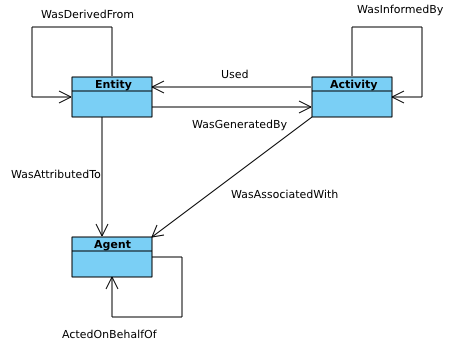
Wikimedia Commons
Related visuals with source and licence credit

08Asked out loud
The same term in the words somebody uses speaking to an assistant rather than typing into a box — written from the situation, which is why each one carries the situation it came from.
Yes, you can view the Data Lineage for that snippet in the search console, which shows the source URL and processing steps.
Usually, you can click the Data Lineage icon next to each metric to see the original URL and any transformations applied.
Yes, the Data Lineage map provides a clear audit trail of source URLs and processing steps, which you can export for the auditors.