

An examination of signals large language models use to surface a brand, checking for gaps, bias, or outdated information.
01What it is and how it works
During an AI Audit we crawl the same data sources that generative search models ingest – public webpages, structured data, and recent news. The audit then runs those pages through a model‑agnostic parser that extracts the snippets the model would likely rank. By comparing the extracted snippets to the brand’s messaging guide, we see where the AI’s view diverges from the intended voice. The process sits one level below the headline definition: it does not change the model, it only maps the model’s current knowledge.
It is a check of what an AI sees when it talks about your brand.
02What to do about it
Pick one brand page you control and add clear, up‑to‑date schema.org markup. Then run the audit tool on that URL and note any missing fields. Next, draft a short FAQ that addresses the most common AI‑generated misconceptions you saw. Publish the FAQ on a dedicated sub‑page and link to it from the original page. Finally, schedule a 30‑minute review meeting this week to assign ownership of each fix.
03How it is measured or noticed
The audit surface includes three metrics: (1) snippet relevance score – a similarity rating between the model’s snippet and the brand’s key messages; (2) coverage ratio – the percentage of brand‑owned URLs that appear in the model’s top‑k results; and (3) bias flag count – how many times the model presents the brand in a context that conflicts with declared values. You can view these numbers in the dashboard that the audit tool provides.
04Common mistakes
- Relying only on meta descriptions and ignoring structured data.
- Assuming a single audit run captures future model updates.
- Fixing only the low‑scoring pages and leaving high‑traffic pages untouched.
05Limits
An AI Audit does not predict how a proprietary model will weight new content after a major algorithm change. It also cannot audit content behind paywalls or private APIs. The audit is often confused with a traditional SEO audit, but the focus here is on language‑model signals, not on keyword rankings.
06Worked example
"After running the AI Audit on our flagship product page, the tool showed a relevance score of 0.42 and flagged that the model was pulling an outdated price from a 2022 press release. We added priceSpecification markup with the current price, republished the page, and the next audit raised the relevance score to 0.78."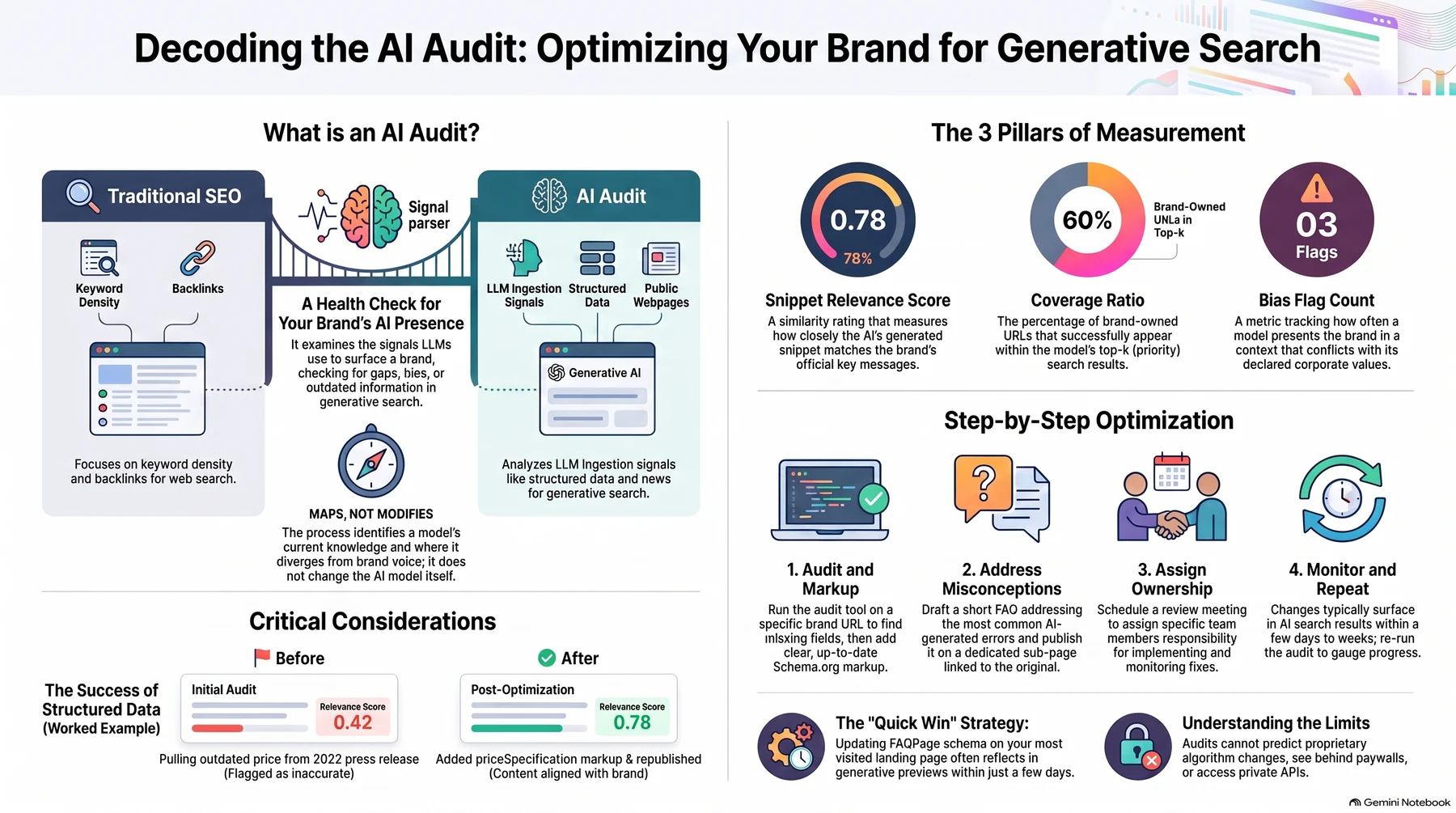
07Frequently asked questions
How does an AI Audit differ from a regular SEO audit?
It depends on the technology being examined. An AI Audit looks at the signals large language models use, such as indexed webpages, structured data, and recent news, whereas an SEO audit focuses on search‑engine ranking factors like backlinks and keyword density. The metrics and recommendations are therefore tailored to generative search rather than classic web search.
Should I conduct an AI Audit for every brand page I own?
Usually you start with the most important or high‑traffic pages. Running an audit on every single page can be costly and may produce diminishing returns, especially if the pages share the same schema and content strategy. Prioritise the pages that represent core brand messages or that are most likely to be queried.
Who can perform an AI Audit and what tools are required?
It depends on the expertise available in your team. A technical marketer or SEO specialist can run the crawl using tools that simulate LLM data ingestion, and then analyse the snippet relevance score and coverage ratio. Adding or updating schema.org markup is usually done in a CMS or via direct HTML editing.
Does an AI Audit still work after a major model update?
Usually the audit remains useful for spotting existing gaps, but it cannot predict how a new model will weight fresh content. Major algorithm changes can shift relevance scores, so you may need to repeat the audit to see the impact of the update.
What are the risks of ignoring gaps identified in an AI Audit?
Usually you will see your brand’s snippets become less relevant or disappear from AI‑generated answers. This can lead to loss of visibility, mis‑representation of key messages, and missed conversion opportunities. You’ll notice the problem when users report outdated or incorrect information from the assistant.
How long does it take for changes made after an AI Audit to appear in AI search results?
It depends on how quickly the model re‑indexes the updated sources. For most public webpages, a few days to a couple of weeks is typical, but some models may take longer to reflect schema changes. You can monitor the snippet relevance score during that period to gauge progress.
08Asked out loud
The same term in the words somebody uses speaking to an assistant rather than typing into a box — written from the situation, which is why each one carries the situation it came from.
Yes, you can run a quick AI Audit by checking the schema.org markup on the page you control. Make sure the markup includes up‑to‑date brand identifiers and key messages, then republish the page. The changes should start surfacing in the next crawl cycle.
Usually you should verify the source page and update its structured data. Add current information and clear schema tags, then let the page be re‑crawled. After a short period the assistant will pull the fresh snippet.
It depends on the alignment between your key messages and the content the model indexes. Check that the page’s headline, meta description, and schema markup reflect the brand’s core messages, and remove any outdated sections. Once aligned, the relevance score should improve on the next measurement.