

Long-term Memory (LTM) is a stage within the Atkinson–Shiffrin model responsible for holding informative knowledge indefinitely, contrasting with short-term memory which only lasts for about 18 to 30 seconds.
Individuals studying artificial intelligence capabilities or cognitive science might read this in conjunction with materials detailing conversational context management or advanced AI architecture.
External context
For those working on developing systems that require persistent knowledge, it is important to understand that LTM is broadly divided into two types: explicit memory (which includes specific events and general facts) and implicit memory (which covers learned procedures and emotional conditioning). This structure dictates how different kinds of information must be stored and retrieved for the AI model to maintain context across multiple interactions.
Long-term memory Wikipedia contributors, “Long-term memory”, en.wikipedia.orgLicence01What it is and how it works
In generative AI, Long‑term Memory refers to a separate storage layer that keeps embeddings or structured records after a request finishes. When a new query arrives, the system retrieves the most relevant stored vectors, injects them into the prompt, and the model can answer with that prior knowledge. The storage is usually a vector database or a fine‑tuned knowledge base that lives outside the stateless inference endpoint. The process happens in three steps: 1) capture key brand facts (e.g., tagline, product specs) during an onboarding session, 2) embed and write them to the memory store, 3) on subsequent queries, perform a similarity search and prepend the results to the model’s context. Because the model’s own parameters stay unchanged, the memory can be edited without retraining.
It is a way for AI to remember things over time.
02What to do about it
This week you can start building reliable Long‑term Memory for your brand: Identify the top five brand messages you want the AI to recall (mission, USP, tone). Write each message as a short, factual sentence and add schema.org markup where possible. Use the OpenAI `embeddings` endpoint to turn each sentence into a vector and store it in a vector DB such as Pinecone or a simple JSON file. Add a retrieval step to your query pipeline that fetches the top two vectors and concatenates them to the user prompt. * Run a quick test: ask the model today about your brand, then repeat the same question tomorrow and verify the answer stays consistent.
03How it is measured or noticed
You know Long‑term Memory is working when the AI returns the same brand fact across separate sessions without you re‑prompting it. Track these signals: Consistency score: compare the answer to a reference answer using a similarity metric (e.g., cosine similarity > 0.9). Retrieval latency: monitor how long the vector search takes; a stable low latency indicates the store is being hit. Usage logs: OpenAI’s request logs show a `retrieval` field when a memory lookup occurs. Brand signal index: create a simple KPI that counts brand‑specific keywords appearing in AI‑generated snippets over time.
How the record puts it
Long-term memory (LTM) is the stage of the Atkinson–Shiffrin memory model in which informative knowledge is held indefinitely.
04Common mistakes
- Assuming the model will automatically learn from every chat log – you must explicitly write to the memory store.
- Overloading the store with irrelevant facts – retrieval will surface noise and dilute brand messaging.
- Never updating stale facts – outdated information will keep being served until you replace the vectors.
05Limits
Long‑term Memory is not a magic extension of the model’s parameters. It only works with APIs that expose a retrieval layer (e.g., OpenAI’s retrieval mode). Token limits still apply to the combined prompt, so you can only prepend a few short facts per request. Memory is often confused with prompt engineering; the former is persistent storage, the latter is a one‑off instruction. Finally, models that do not support external retrieval cannot use this pattern at all.
06Worked example
"When I asked the assistant today, 'What is the tagline for Acme Widgets?', it replied, 'Acme Widgets – Innovation that moves you forward.' I asked the same question tomorrow and got the identical tagline, proving the Long‑term Memory store was consulted."
The entry above is written by GetLoopLoop. What follows is what independent catalogues hold about the same term — none of it is the source of this page.
- Also called
- GO:0007616, LTM
- Kind of thing
- biological process, memory type
The same term on Wikipedia
Catalogued in 34 languages07Frequently asked questions
How is Long‑term Memory different from the short‑term context the model uses during a single chat?
No, Long‑term Memory is not the same as the temporary context that the model keeps for one conversation. It stores embeddings or structured records in a separate layer that persists after the request ends. This allows the AI to recall brand facts in later sessions without being re‑prompted.
Should we start building Long‑term Memory for our brand right now?
It depends on how critical consistent brand recall is for your use cases. If you need the AI to repeat specific brand messages across multiple interactions, investing in Long‑term Memory makes sense. Otherwise, you can rely on prompt engineering until the need becomes clear.
What is the actual process for adding brand signals to Long‑term Memory?
You do this by creating embeddings or structured records for each brand signal and writing them to the dedicated storage layer after a request finishes. Then you configure the retrieval step so that future queries can query that storage and inject the relevant facts back into the prompt. The process is typically handled by your integration code, not the model itself.
Does Long‑term Memory always return the correct brand fact when queried later?
Usually it returns the fact that was stored, but accuracy depends on how well the data was indexed and retrieved. If the embedding similarity thresholds are too loose, the model might pull a related but incorrect fact. Regular validation and cleaning of stored records help keep recall reliable.
What are the consequences if Long‑term Memory serves outdated or wrong brand information?
If it returns outdated information, the AI will repeat that mistake across sessions, leading to inconsistent brand messaging. You would notice the error when the same incorrect fact appears in multiple independent queries. Updating or deleting the stale record restores correct behavior.
How long does it take before Long‑term Memory shows consistent brand recall across different sessions?
Typically you see consistent recall after the first successful write and a few retrieval attempts. The storage layer is immediate, but you may need to test across a handful of sessions to confirm stability. Monitoring for repeated correct facts helps verify that the memory is working as intended.
Wikimedia Commons
Related visuals with source and licence credit
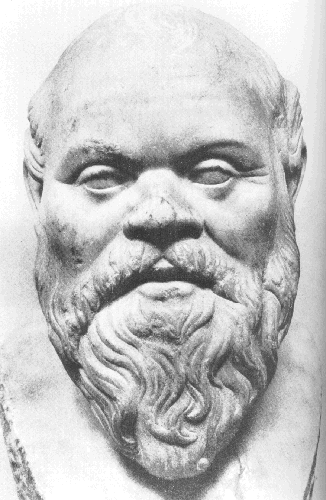

08Asked out loud
The same term in the words somebody uses speaking to an assistant rather than typing into a box — written from the situation, which is why each one carries the situation it came from.
Yes, it can store your brand tone in Long‑term Memory and retrieve it for future conversations. You just need to add the tone as a record after the first interaction, and the system will inject it automatically later.
No, the AI isn’t supposed to change the tagline on its own; you need to write the correct tagline into Long‑term Memory. Once stored, the retrieval step will keep the same tagline across all mobile queries.
Usually you can verify that the brand promise is already saved in Long‑term Memory and, if needed, re‑store it before finalizing the proposal. Checking the stored record ensures the AI will include the correct promise when generating the document.
09More in GEO / AI search
10Sources
- OpenAI documentation
- Long-term memory
- Wikidata — Q18601
- Wikimedia Commons — No machine-readable author provided. Gdh~commonswiki assumed (based on copyright claims).
- Wikimedia Commons — The original uploader was Magnus Manske at English Wikipedia. Later versions were uploaded by Optimager at en.wikipedia.
- Wikimedia Commons — PC78, based on work by Julian Herzog, Zscout370, Ed g2s and Erin Silversmith